
Ein praktischer Leitfaden für Ingenieure zur Reduzierung von Ausschuss, Verbesserung der Konsistenz und Erzielung reproduzierbarer Ergebnisse in der Blechbearbeitung
In der modernen Blechbearbeitung ist die Biegegenauigkeit zu einem direkten Indikator für die Wettbewerbsfähigkeit der Fertigung geworden. Kunden erwarten engere Toleranzen, kürzere Lieferzeiten und gleichbleibende Qualität über alle Chargen hinweg. Eine Flanschabmessung, die nur 1 mm außerhalb der Toleranz liegt, kann Montageprobleme verursachen; ein Biegewinkelfehler von nur 2 Grad kann Nacharbeiten, Schweißkorrekturen oder den kompletten Austausch des Bauteils erforderlich machen. Treten diese Probleme wiederholt in der Produktion auf, übersteigen die Kosten den Wert des Ausschussmaterials bei Weitem.
Viele Hersteller gehen fälschlicherweise davon aus, dass eine moderne CNC-Abkantpresse automatisch präzise Teile garantiert. Die Realität sieht jedoch anders aus. Manche Betriebe erzielen mit Standardmaschinen eine hervorragende Wiederholgenauigkeit, während andere selbst nach Investitionen in Premiummaschinen mit uneinheitlichen Ergebnissen zu kämpfen haben. Der Unterschied liegt meist nicht allein in der Maschine, sondern im zugrunde liegenden Fertigungssystem.
Dieses Whitepaper erläutert die zehn häufigsten Ursachen für Fehler beim Abkanten und bietet praktische technische Methoden zur Verbesserung der Konsistenz, zur Reduzierung des Ausschusses und zur Erzielung wiederholbarer Ergebnisse bei der Blechbearbeitung.
Kernaussage | Praktische Bedeutung |
Die Biegegenauigkeit ist eine Systemfrage. | Maschinen-, Werkzeug-, Material- und Prozessvariablen müssen gemeinsam kontrolliert werden. |
Die meisten Fehler sind vermeidbar. | Eine strukturierte Checkliste und validierte Konfigurationsdaten reduzieren wiederholte Fehlersuche. |
Erfahrung ist wertvoll, aber nicht ausreichend. | Dokumentierte Standards gewährleisten eine reproduzierbare Qualität über alle Bediener und Schichten hinweg. |
Die meisten Hersteller unterschätzen die wahren Kosten von Biegefehlern. Wenn ein Teil die Qualitätskontrolle nicht besteht, wird oft sofort der Wert des Ausschussmaterials berechnet. Tatsächlich sind die Materialkosten aber meist nur ein kleiner Teil des Problems.
Ein einziger fehlerhafter Biegevorgang kann eine Kettenreaktion auslösen, die sich durch Schweißen, Montage, Prüfung, Auslieferung und Kundenkommunikation zieht. Deshalb konzentrieren sich führende Fertigungsunternehmen nicht nur auf die Korrektur von Biegefehlern, sondern vor allem darauf, diese von vornherein zu vermeiden.
Kostenkategorie | Mögliche Auswirkungen |
Schrottmaterial | Verlust von Rohmaterial und Entsorgungskosten |
Maschinenzeit | Zusätzliche Produktionsstunden und reduzierte Kapazität |
Arbeitskosten | Nachbearbeitung, Fehlersuche und zusätzliche Bearbeitung |
Schweißeinstellungen | Mangelhafte Passform und zusätzlicher Fertigungsaufwand |
Montageverzögerungen | Nachgelagerte Engpässe und verpasste Zeitpläne |
Qualitätsprüfungen | Zusätzliche Mess- und Prüfzeit |
Lieferverzögerungen | Kundenunzufriedenheit und Terminrisiko |
Reputationsrisiko | Vertrauensverlust und Verlust zukünftiger Geschäftsmöglichkeiten |
Einer der größten Irrtümer in der Blechbearbeitung ist die Annahme, die Biegegenauigkeit sei primär ein Maschinenproblem. Tatsächlich ist eine Abkantpresse nur eine Komponente eines umfassenderen Fertigungssystems. Vier Hauptfaktoren bestimmen die endgültige Biegegenauigkeit: Maschine, Werkzeug, Material und Prozess.
System | Primärer Einfluss |
Maschine | Mechanische Präzision, Rahmensteifigkeit, Balligkeit, Hinteranschlaggenauigkeit und Wiederholgenauigkeit |
Werkzeuge | Stempelgeometrie, Matrizenöffnung, Werkzeugausrichtung und Verschleißzustand |
Material | Streckgrenze, Zugfestigkeit, Rückfederungsverhalten und Dickenvariation |
Verfahren | Programmierung, Einrichtungsverfahren, Biegeablauf, Inspektion und Bedienerdisziplin |
Ingenieurprinzip Die Biegegenauigkeit ist nicht allein ein Problem der Maschine, sondern ein Problem des gesamten Fertigungssystems. Wenn eines dieser Systeme schlecht gesteuert wird, leidet die Produktionskonsistenz. |
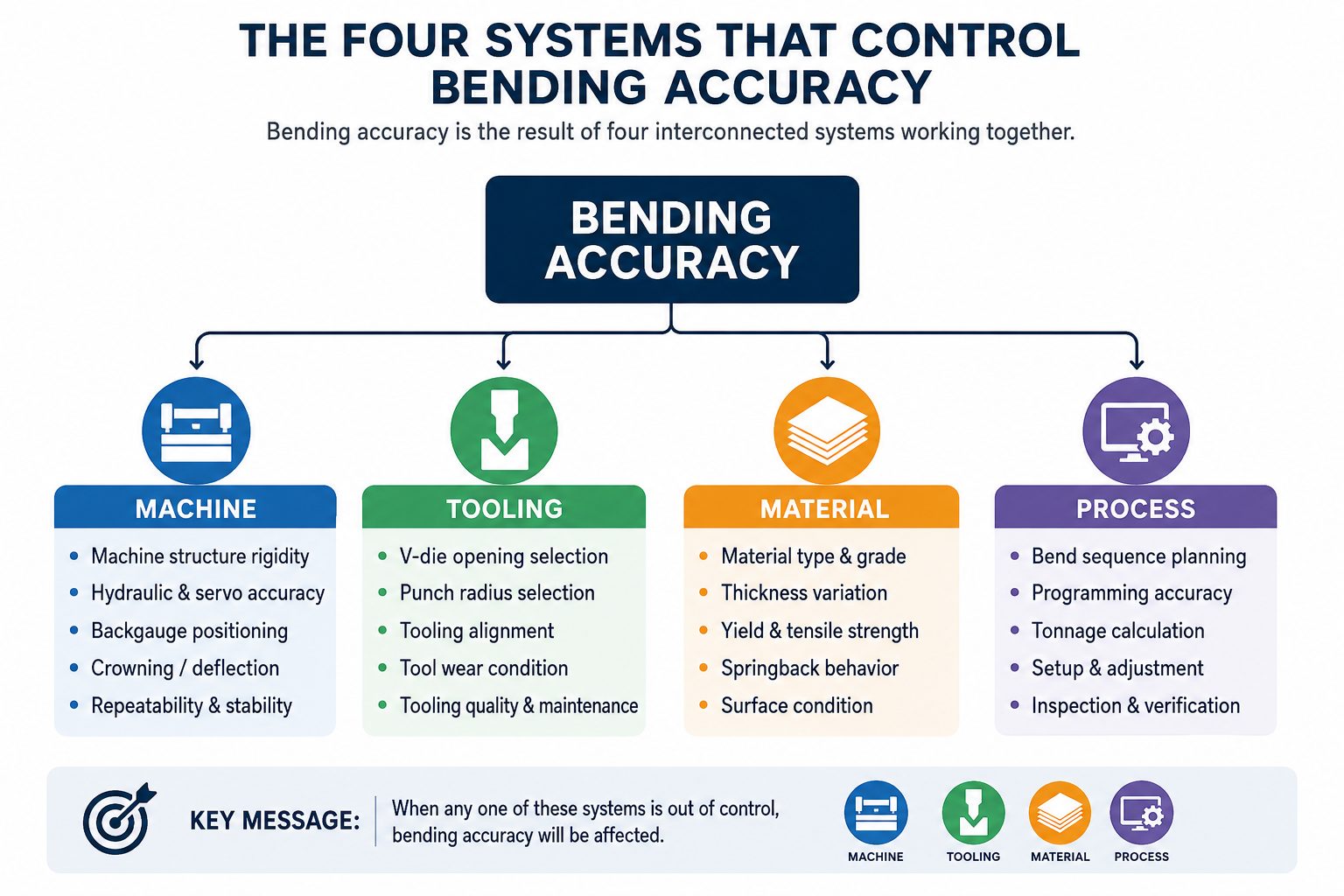
Abbildung 1. Die vier Systeme, die die Biegegenauigkeit beeinflussen: Maschine, Werkzeug, Material und Prozess.
Die Wahl der korrekten V-Matrizenöffnung ist eine der wichtigsten Entscheidungen beim Biegeprozess. Die Matrizenöffnung beeinflusst direkt die Biegekraft, den Innenradius, das Rückfederungsverhalten, die Oberflächenqualität und die Winkelkonstanz.
Eine zu kleine Matrizenöffnung erhöht den erforderlichen Pressdruck und beschleunigt den Werkzeugverschleiß. Sie kann außerdem zu übermäßiger Oberflächenmarkierung und einem engeren Innenradius als erwartet führen. Eine zu große Matrizenöffnung kann hingegen einen größeren Innenradius, erhöhte Rückfederung und eine instabile Winkelsteuerung zur Folge haben, wenn sie nicht auf das Material und die Bauteilanforderungen abgestimmt ist.
Eine Fertigungswerkstatt, die 3 mm dicken Baustahl biegt, wählte eine V16-Matrizenöffnung, da diese bereits an der Maschine installiert war. Eine spätere technische Überprüfung ergab jedoch, dass eine V24-Öffnung besser geeignet gewesen wäre. Die Verwendung der kleineren Matrize führte zu einem höheren Presskraftbedarf, erhöhtem Werkzeugverschleiß, Oberflächenmarkierungen und Winkelabweichungen. Nach dem Wechsel zur korrekten Matrizenöffnung verbesserte sich die Produktionsstabilität sofort.
Materialstärke | Typische V-Öffnung |
Dünnes Blech | Typischerweise 8 × Dicke |
Mittlere Dicke | Typischerweise 10 × Dicke |
Dicke Platte | Typischerweise 12 × Dicke |
Diese Werte sind Richtlinien, keine allgemeingültigen Regeln. Bei der konkreten Auswahl sollten Materialart, erforderlicher Innenradius, Biegelänge, Oberflächenanforderungen und die verfügbare Kapazität der Abkantpresse berücksichtigt werden.
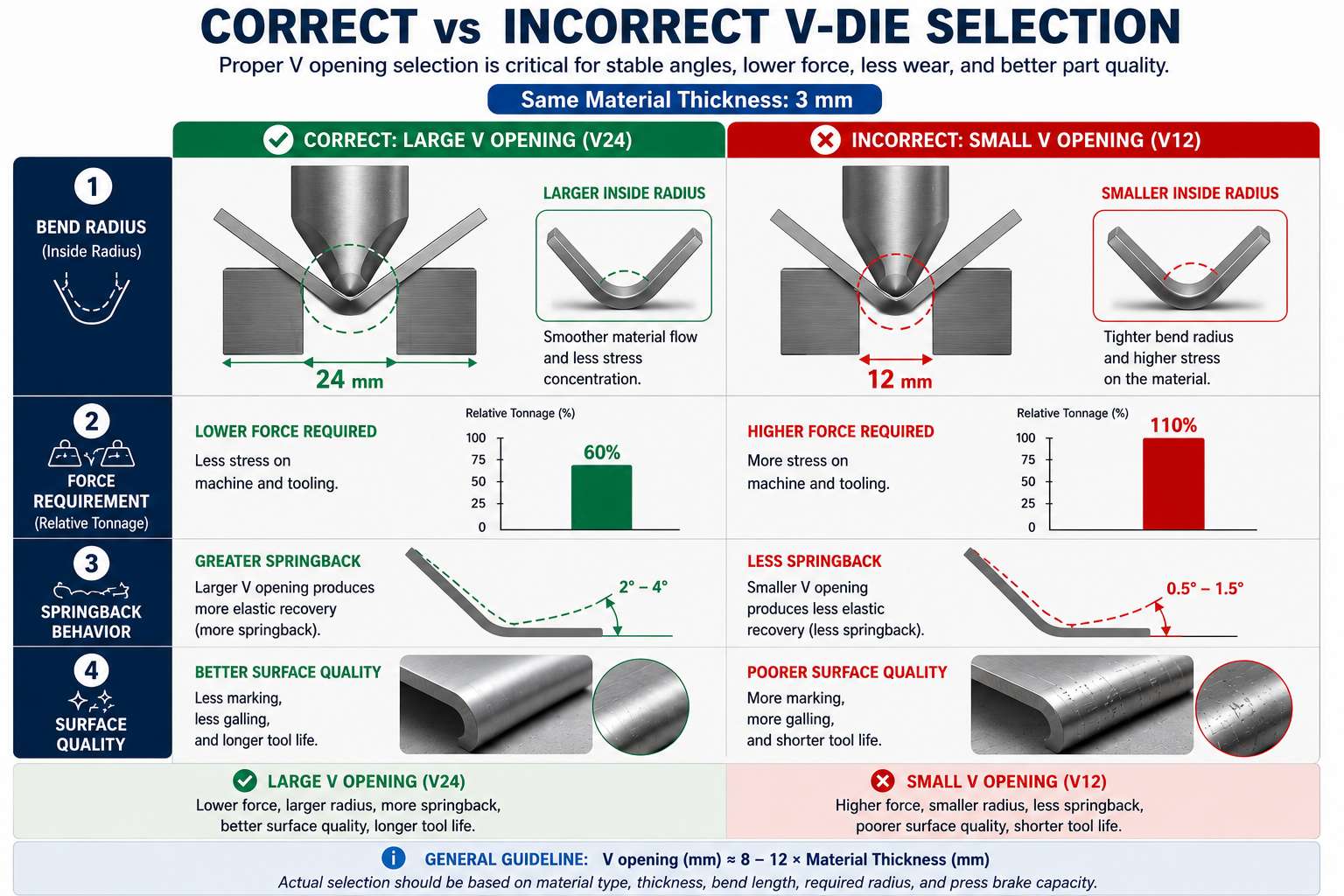
Abbildung 2. Korrekte vs. inkorrekte V-Matrizen-Auswahl bei gleicher Materialdicke von 3 mm.
Nicht alle Bleche verhalten sich gleich. Selbst Materialien mit identischer Nenndicke können aufgrund von Abweichungen in Streckgrenze, Zugfestigkeit, Herstellungsverfahren, Lieferant und Materialcharge unterschiedliche Biegeergebnisse liefern.
Beispielsweise weist Edelstahl 304 typischerweise eine stärkere Rückfederung auf als Baustahl. Aluminium erfordert oft andere Radiusannahmen und Kompensationswerte. Hochfeste Stähle benötigen häufig deutlich höhere Biegekräfte. Hersteller, die alle Materialien gleich behandeln, erleben oft unvorhersehbare Produktionsergebnisse.
Die erfolgreichsten Verarbeiter pflegen Materialreferenzdaten, die auf tatsächlichen Produktionserfahrungen basieren, anstatt sich nur auf Standardannahmen zu verlassen.
Die Rückfederung ist nach wie vor eine der häufigsten Ursachen für Biegeungenauigkeiten. Nach dem Zurückziehen des Stempels erholt sich das Material elastisch und kehrt teilweise in seine ursprüngliche Form zurück. Reicht diese Kompensation nicht aus, wird der endgültige Winkel größer als beabsichtigt.
Material | Typische Rückfederung beim Luftbiegen |
Baustahl | 1°-2° |
Verzinkter Stahl | 1°-2° |
Edelstahl 304 | 2°-4° |
Edelstahl 201 | 3°-5° |
Aluminium | 2°-3° |
Referenzhinweis Die angegebenen Werte sind typische Referenzwerte für das Luftbiegen. Die tatsächliche Rückfederung hängt von der Werkstoffgüte, der Dicke, dem Werkzeug, dem Biegeradius und den Biegebedingungen ab. |
Ein Hersteller stellte von Baustahl auf Edelstahl 304 um, wobei die Biegeparameter unverändert blieben. Dies führte zu einem konstanten Winkelfehler von etwa 3 Grad. Nach der Anpassung der Rückfederungskompensationswerte an das neue Material war das Problem behoben. Diese einfache Maßnahme verhinderte Nacharbeiten und Qualitätsprobleme.
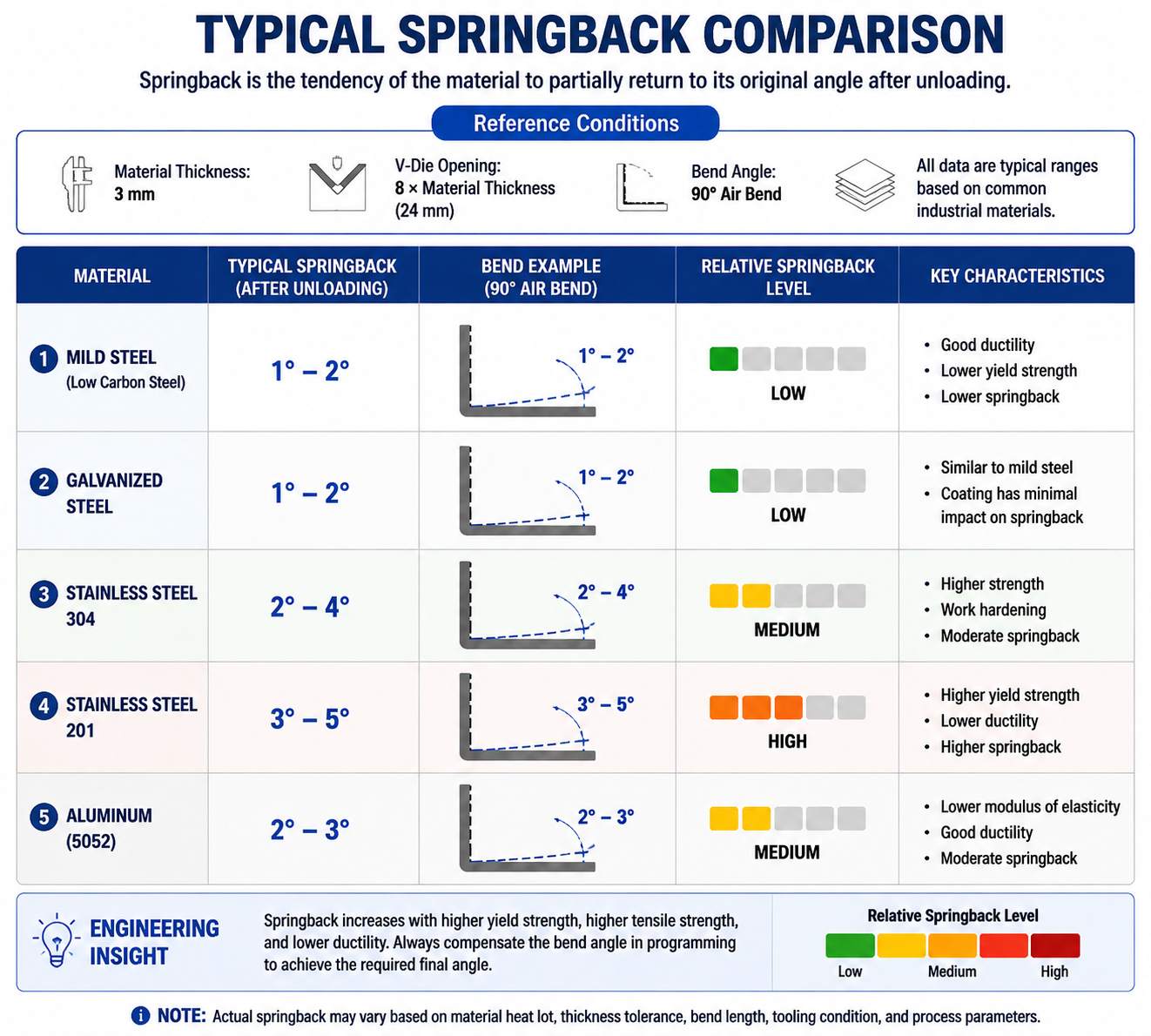
Abbildung 3. Typischer Vergleich der Rückfederung beim Luftbiegen für gängige Blechwerkstoffe.
Werkzeugverschleiß entwickelt sich oft schleichend und ist daher schwer zu erkennen, bis Qualitätsprobleme auftreten. Häufige Werkzeugprobleme sind abgerundete Stempelspitzen, abgenutzte Matrizenschultern, Oberflächenbeschädigungen, Ausbrüche am Werkzeug und Fehlausrichtung.
Schon geringfügige Geometrieänderungen können die Winkelkonsistenz und Radiusbildung erheblich beeinträchtigen. Führende Fertigungsbetriebe setzen daher auf präventive Inspektionsprogramme, anstatt auf sichtbare Fehler zu warten. Die Werkzeugwartung zählt häufig zu den kostengünstigsten Methoden zur Verbesserung der Biegequalität.
Abkantpressenrahmen sind zwar extrem steif, aber nicht vollkommen. Unter Last verformen sich Rahmen und Bett elastisch. Ohne Bombierungskompensation kann die Mitte eines langen Werkstücks einen größeren Biegewinkel aufweisen als die Enden, da sich die Maschine in der Mitte nach unten durchbiegt und sich das Biegeverhältnis entlang der Biegelinie ändert.
Ein Produktionsteam bog ein 4000 mm langes Werkstück auf einer 250-Tonnen-Abkantpresse und stellte fest, dass die Enden nahe am 90°-Zielwinkel lagen, während der Mittelteil deutlich größer war. Auf den ersten Blick wirkte das Teil akzeptabel, doch eine Überprüfung entlang der gesamten Biegelinie offenbarte die Abweichung.
Position entlang der Biegelinie | Gemessener Winkel ohne Wölbung | Ergebnis |
Linkes Ende | 90° | Nahes Ziel |
Center | 92°-95° | Größerer Winkel (unterbogener Zustand) |
Rechtes Ende | 90° | Nahes Ziel |
Moderne Bombiersysteme gleichen diese Durchbiegung aus und verbessern die Winkelkonstanz deutlich. Bei langen Werkstücken und Anwendungen mit hohem Pressdruck ist eine korrekte Bombierung unerlässlich.
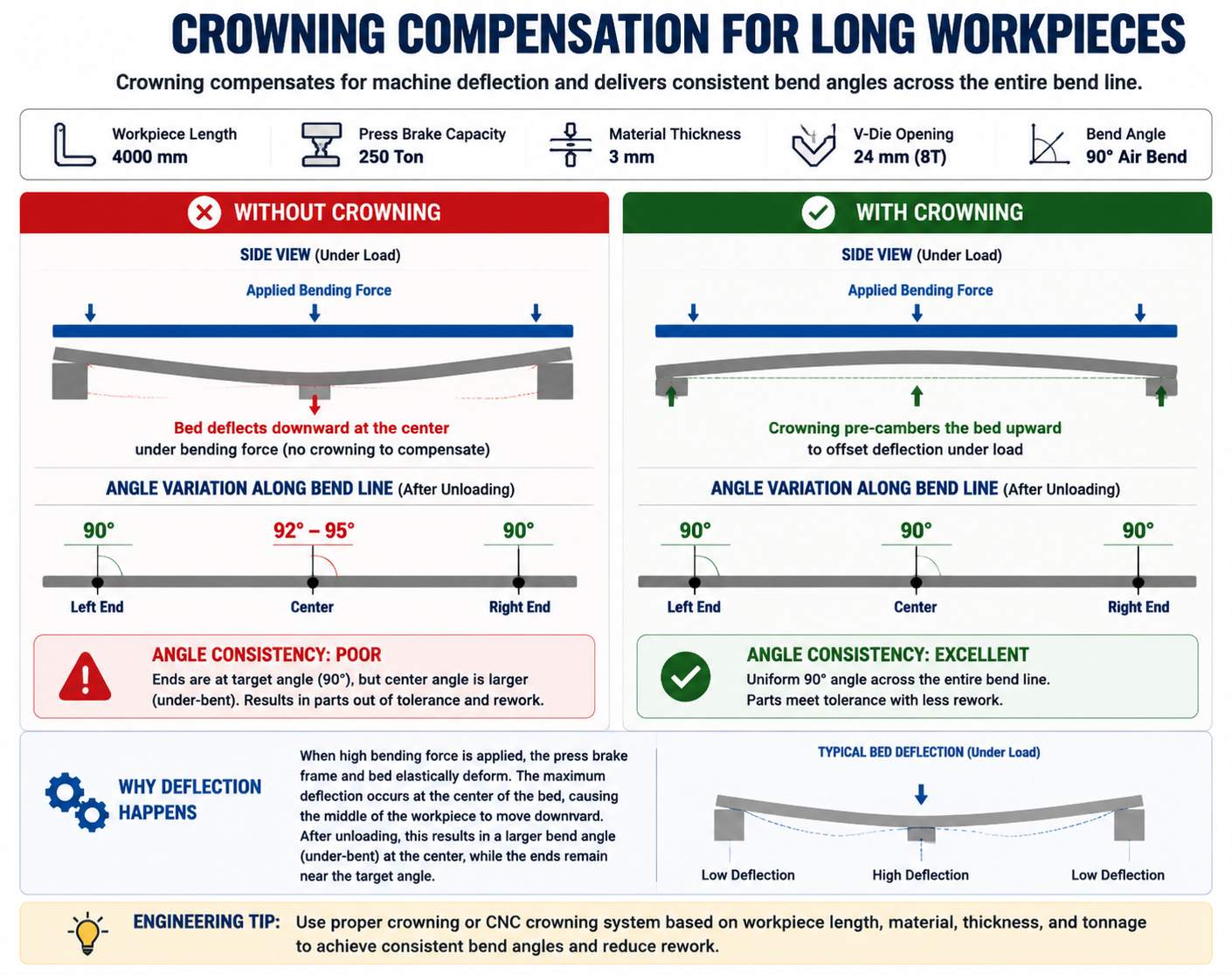
Abbildung 4. Die Kompensation der Wölbung trägt dazu bei, gleichmäßige Winkel bei langen Werkstücken zu gewährleisten.
Die Genauigkeit der Hinteranschlagslehre beeinflusst die Flanschabmessungen direkt. Selbst bei korrekten Biegewinkeln kann eine ungenaue Positionierung zu unbrauchbaren Teilen führen. Häufige Ursachen sind Fehler bei der Servokalibrierung, mechanischer Verschleiß, lose Bauteile, Kollisionsschäden und unzureichende Wartung.
Ein Positionierungsfehler von nur wenigen Millimetern kann erhebliche Maßabweichungen bei Fertigprodukten verursachen. Regelmäßige Kalibrierung und Erststückprüfung sind daher weiterhin unerlässliche Qualitätskontrollmaßnahmen.
Viele Biegeprobleme entstehen lange vor dem ersten Biegevorgang. Eine ungünstige Biegereihenfolge kann zu Teileinterferenzen, Werkzeugkollisionen, Positionierungsschwierigkeiten und akkumulierten Maßfehlern führen.
Ein Bediener biegt an einem komplexen Gehäuse mehrere kurze Flansche, bevor er den Hauptflansch formt. Die frühen Biegungen beeinträchtigen die Positionierung bei späteren Arbeitsgängen, was zu Maßabweichungen und Rüstzeiten führt. Eine optimierte Abfolge beseitigt diese Beeinträchtigungen und verbessert sowohl die Genauigkeit als auch die Produktivität.
Für ein stabiles Biegen sind präzise Kraftberechnungen erforderlich. Eine zu geringe Presskraft kann die korrekte Materialumformung verhindern. Eine zu hohe Presskraft erhöht die Belastung von Werkzeugen und Maschinenkomponenten und kann deren Standzeit verkürzen.
Für präzise Berechnungen müssen Materialart, Materialstärke, Biegelänge, V-Öffnung und Biegeverfahren berücksichtigt werden. Viele Bediener versuchen, Qualitätsprobleme durch einfaches Erhöhen der Kraft zu lösen. Dies mag kurzfristig wirksam erscheinen, führt aber häufig zu neuen Problemen wie Werkzeugverschleiß und Maschinenbeanspruchung. Ingenieurtechnisch fundierte Tonnageberechnungen bieten eine zuverlässigere Lösung.
Die Entwicklung von Abwicklungen hängt von genauen Biegezugabeberechnungen ab. Falsche Annahmen führen häufig zu falschen Gesamtmaßen, Montageproblemen, Schweißschwierigkeiten und wiederholten Einrichtungsanpassungen.
Zu den wichtigsten Variablen zählen Materialstärke, Innenradius, K-Faktor und Biegeverfahren. Die zuverlässigsten Biegezugabewerte werden aus tatsächlichen Produktionsmessungen und nicht aus Standard-CAD-Werten abgeleitet. Hersteller, die ihre Biegedaten kontinuierlich validieren, erzielen eine höhere Maßgenauigkeit.
Von allen zehn in diesem Leitfaden besprochenen Ursachen ist mangelnde Standardisierung oft die schädlichste. Viele Fertigungsbetriebe sind stark von der Erfahrung der einzelnen Bediener abhängig. Daher kann es vorkommen, dass eine Schicht einwandfreie Teile produziert, während eine andere Schicht mit derselben Maschine, demselben Material und demselben Werkzeug uneinheitliche Ergebnisse liefert.
Weltweit führende Hersteller reduzieren diese Variabilität durch dokumentierte Verfahren, die Werkzeugauswahlregeln, materialspezifische Parameter, Rückfederungskompensationswerte, Einrichtungsverfahren, Prüfanforderungen und Qualitätskontrollpunkte festlegen. Die Standardisierung wandelt die Biegequalität von bedienerabhängig zu prozessabhängig um.
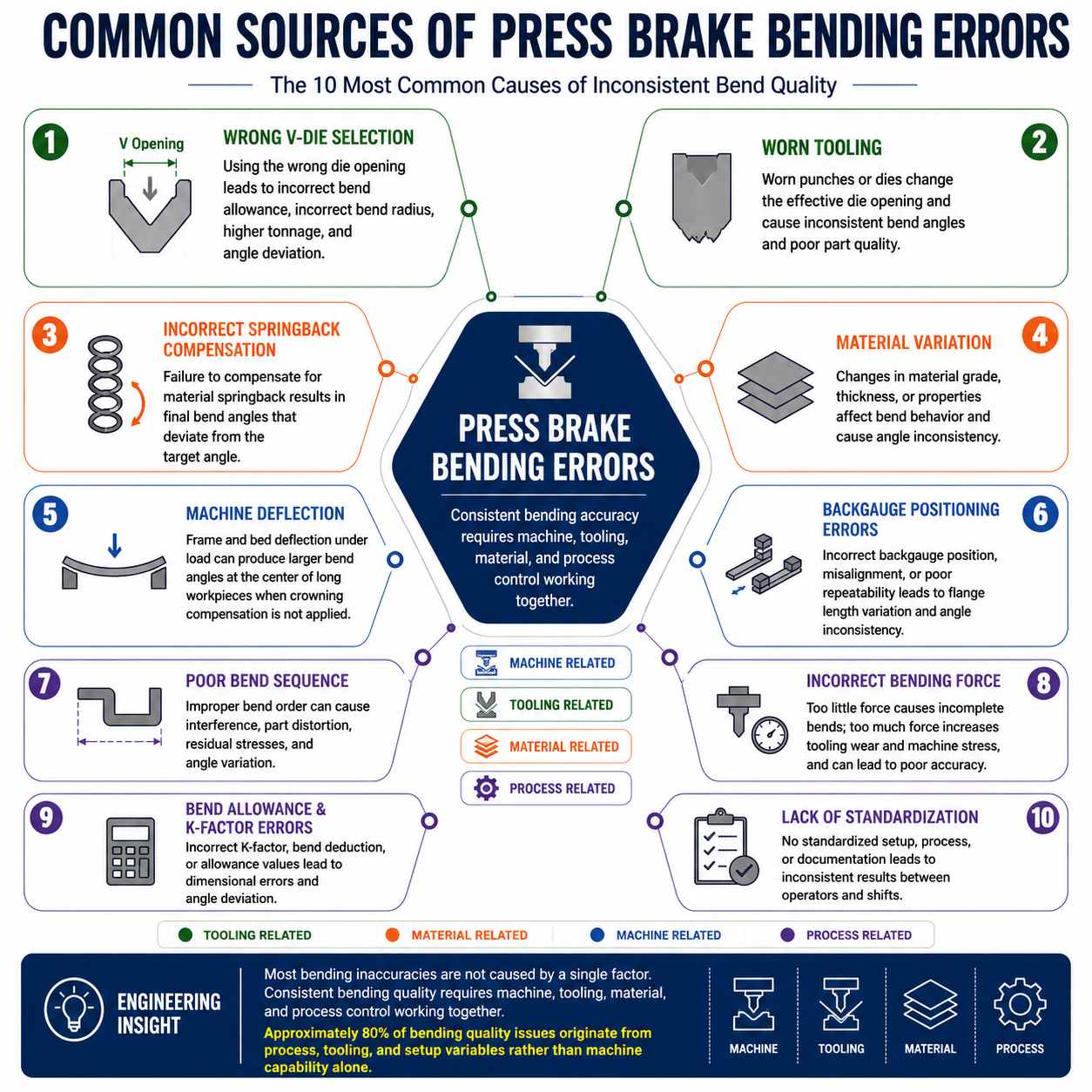
Abbildung 5. Häufige Ursachen für Biegefehler bei Abkantpressen in Abhängigkeit von Werkzeug-, Material-, Maschinen- und Prozessvariablen.
Unternehmen, die für gleichbleibende Biegequalität bekannt sind, verlassen sich selten auf das Prinzip von Versuch und Irrtum. Stattdessen entwickeln sie Systeme, die die Variabilität reduzieren und die Wiederholgenauigkeit im Laufe der Zeit verbessern.
· Materialdatenbanken
· Springback-Datenbanken
· Standardisierte Werkzeugauswahl
· Erststückprüfung
· Vorbeugende Wartungsprogramme
· Kalibrierungspläne für Hinteranschläge
· Prozessdokumentation
· Bedienerschulungssysteme
Diese Vorgehensweisen werden zu einem Wettbewerbsvorteil, da sie es ermöglichen, bewährtes Einrichtungswissen über verschiedene Bediener, Schichten und Produktionschargen hinweg zu wiederholen.
Eine der frustrierendsten Situationen in der Blechbearbeitung ist, wenn ein Biegeproblem scheinbar gelöst ist, nur um wenige Tage oder Wochen später wieder aufzutreten. Ein Bediener korrigiert den Winkel, die Produktion verbessert sich, und das Problem verschwindet vorübergehend. Dann kehrt es zurück.
Dieser Kreislauf entsteht, weil viele Fertigungsbetriebe Symptome statt Ursachen beheben. Ein Betrieb kann beispielsweise ungleichmäßige Biegewinkel feststellen und darauf reagieren, indem er die Biegetiefe ändert. Der Winkel scheint wieder korrekt zu sein, die eigentliche Ursache kann jedoch in Materialabweichungen, Werkzeugverschleiß, Einstellungen der Balligkeit oder einer Rückfederungskompensation liegen. Da die eigentliche Ursache nie behoben wurde, tritt das Problem schließlich wieder auf.
Ursachenorientiertes Denken Statt zu fragen: „Wie können wir das heutige Problem beheben?“, fragen führende Hersteller: „Warum hat der Prozess das Auftreten eines Fehlers zugelassen?“ Dieser Unterschied in der Denkweise entscheidet darüber, ob ein Problem dauerhaft verschwindet oder immer wiederkehrt. |
Führende Hersteller erreichen die Biegegenauigkeit nicht allein durch Erfahrungswerte. Sie entwickeln ein Kontrollsystem für den Biegeprozess. Ein solches System besteht typischerweise aus fünf Ebenen.
Steuerungsschicht | Was soll standardisiert oder überprüft werden? |
Materialkontrolle | Lieferant, Güteklasse, Dicke und Rückfederungsverhalten |
Werkzeugsteuerung | Auswahl der V-Öffnung, Stempelradius, Prüfintervalle und Austauschkriterien |
Maschinensteuerung | Genauigkeit des Hinteranschlags, Bombierungsleistung, hydraulische Wiederholgenauigkeit und mechanische Ausrichtung |
Prozesssteuerung | Biegefolge, Kompensationswerte, Tonnageeinstellungen und Einrichtungsverfahren |
Inspektionskontrolle | Standards für die Erststückprüfung, die laufende Fertigungskontrolle und die Endprüfung |
Ein Hersteller von Elektrogehäusen stellte beim Wechsel von Baustahl zu Edelstahl wiederkehrende Winkelabweichungen fest. Zunächst wurde die Biegetiefe erhöht und die Maschineneinstellungen angepasst. Die Ergebnisse verbesserten sich vorübergehend, die Ungenauigkeiten blieben jedoch bestehen.
Die Ursachenanalyse ergab, dass die verwendeten Rückfederungswerte für Baustahl und nicht für Edelstahl entwickelt worden waren. Als Korrekturmaßnahme wurde eine Referenztabelle für die Rückfederung von Edelstahl erstellt und materialspezifische Kompensationswerte festgelegt. Dies führte zu geringeren Winkelabweichungen, schnelleren Rüstzeiten und einer niedrigeren Ausschussquote.
Ein Unternehmen, das Strukturpaneele herstellt, meldete, dass der Mittelwinkel außerhalb der Toleranz lag, während die Endwinkel nahe am Sollwert lagen. Die Bediener vermuteten zunächst Werkzeugverschleiß. Die Untersuchung ergab jedoch eine unzureichende Balligkeitskompensation. Nach der korrekten Einstellung der Balligkeit verbesserte sich die Winkelkonstanz über die gesamte Werkstücklänge.
Ein Fertigungsbetrieb berichtete, dass Schicht A gleichbleibende Teile produzierte, während Schicht B häufig Nacharbeit verursachte. Ausrüstung, Material und Werkzeuge waren identisch. Die Hauptursache lag im Fehlen standardisierter Rüstverfahren. Jeder Bediener verwendete unterschiedliche Kompensationswerte, Rüstmethoden und Prüftechniken. Nach Einführung dokumentierter Biegenormen verbesserte sich die Produktionskonstanz deutlich.
Mythos | Wirklichkeit |
Eine teurere Abkantpresse produziert automatisch bessere Teile. | Selbst hochwertige Anlagen liefern schlechte Ergebnisse, wenn die Prozesssteuerung mangelhaft ist. |
Die Rückfederung ist immer gleich. | Die Rückfederung ändert sich mit dem Material, der Dicke, dem Radius, dem Werkzeug und der Biegemethode. |
Werkzeuge halten ewig. | Der Werkzeugverschleiß verändert allmählich die Umformgeometrie und beeinträchtigt die Genauigkeit. |
Erfahrene Bediener brauchen keine Normen. | Die besten Hersteller kombinieren die Erfahrung der Bediener mit dokumentierten Verfahren. |
Für Fertigungsbetriebe, die sofortige Verbesserungen anstreben, bietet die folgende Vorgehensweise in der Regel einen hohen Nutzen. Die meisten Hersteller können messbare Verbesserungen erzielen, ohne neue Anlagen anschaffen zu müssen.
Priorität | Aktion |
1 | Standardisierung der V-Die-Auswahl |
2 | Erstellen Sie eine Springback-Datenbank |
3 | Überprüfen Sie die Genauigkeit des Hinteranschlags. |
4 | Führen Sie die Erststückprüfung durch. |
5 | Erstellen Sie einen Werkzeugprüfungsplan |
6 | Biegezugabewerte prüfen |
7 | Biegesequenzen optimieren |
8 | Standardisierung der Einrichtungsprozeduren |
9 | Erstellen Sie eine Materialdatenbank |
10 | Prozessdokumentation erstellen |
Vor Produktionsbeginn sind folgende Punkte zu überprüfen:
Prüfgegenstand | Status |
Material bestätigt | □ |
Korrekte V-Form ausgewählt | □ |
Werkzeuge geprüft | □ |
berechnete Tonnage | □ |
Kronenbildung angepasst | □ |
Hinteranschlag kalibriert | □ |
Rückfederungskompensation angewendet | □ |
Biegesequenz überprüft | □ |
Biegetoleranz validiert | □ |
Erststückprüfung abgeschlossen | □ |
Mithilfe dieser einfachen Checkliste lassen sich viele häufige Produktionsprobleme schon im Vorfeld vermeiden.
Um Herstellern dabei zu helfen, die Biegegenauigkeit zu verbessern, bietet der ZYCO Engineering Hub praktische technische Ressourcen, die die in diesem Leitfaden behandelten Themen unterstützen.
Ressourcenkategorie | Empfohlene Ressourcen des Engineering Hub |
Berechnungswerkzeuge | Abkantpressenrechner; Biegezugaberechner;Führung für die Ballenpressen;Pressenkraft-Leitfaden |
Datenbanken für Ingenieurwesen | Materialdatenbank; Rückfederungsdatenbank |
Auswahlwerkzeuge | V-Die-Auswahlwerkzeug |
Technische Leitfäden | Anleitung zum Luftbiegen; Anleitung zum V-Öffnungsbiegen; K-Faktor-Anleitung; Anleitung zum Biegeabzug; Anleitung zum Ballen; Werkzeugauswahlanleitung; Anleitung zur Biegesequenz; Anleitung zur Rückfederungskompensation |
Zusammen bieten diese Ressourcen einen praktischen Rahmen zur Reduzierung von Biegefehlern und zur Verbesserung der Fertigungskonsistenz.
Die Verbesserung der Biegegenauigkeit von Abkantpressen erfordert weit mehr als die Anschaffung besserer Ausrüstung. Hersteller, die Maschinen-, Werkzeug-, Material- und Prozessvariablen systematisch kontrollieren, erzielen durchweg bessere Qualität, niedrigere Ausschussquoten und eine höhere Rentabilität.Es erfordert einen systematischen technischen Ansatz, der die richtige Werkzeugauswahl, verifizierte Materialdaten, Rückfederungskontrolle, Maschinenwartung, genaue Tonnageberechnungen, Validierung der Biegezugabe, Bombierungseinstellung, Hinteranschlagkalibrierung und Prozessstandardisierung kombiniert.
Die erfolgreichsten Fertigungsunternehmen wissen, dass die Biegegenauigkeit vom gesamten Fertigungssystem und nicht von einer einzelnen Maschineneinstellung abhängt. Durch die Kontrolle der zehn in diesem Leitfaden beschriebenen Faktoren können Hersteller Ausschuss reduzieren, die Konsistenz verbessern, die Produktivität steigern und ihren Kunden weltweit qualitativ hochwertigere Produkte liefern.
Da die Fertigungstoleranzen immer enger werden und die Kundenerwartungen immer weiter steigen, bleiben ingenieurtechnisch fundierte Biegeverfahren eine der wichtigsten Grundlagen für eine erfolgreiche Blechbearbeitung.
Mehr erfahren
Entdecken Sie den ZYCO Engineering Hub:
calculator.zycomachine.com/engineering-tools
Warum ist mein Biegewinkel inkonsistent?
Inkonsistente Biegewinkel werden häufig durch Materialabweichungen, Unterschiede in der Rückfederung, Werkzeugverschleiß, Probleme mit der Balligkeit, Fehler bei der Positionierung des Hinteranschlags oder inkonsistente Einrichtungsverfahren verursacht.
Wie beeinflusst die V-Matrizenöffnung die Biegegenauigkeit?
Die V-Öffnung beeinflusst die Kraftanforderungen, den Innenradius, das Rückfederungsverhalten, die Oberflächenqualität und die Winkelkonstanz. Die Wahl der falschen Öffnung führt häufig zu instabilen Ergebnissen.
Hat die Materialart Einfluss auf die Rückfederung?
Ja. Unterschiedliche Materialien führen zu unterschiedlichen Rückfederungswerten. Edelstahl weist im Allgemeinen eine höhere Rückfederung auf als Baustahl, während Aluminium oft andere Radien und Kompensationsannahmen erfordert.
Wodurch werden unterschiedliche Biegewinkel bei einem langen Werkstück verursacht?
Maschinendurchbiegung und unzureichende Bombierungskompensation sind häufige Ursachen für Winkelabweichungen bei langen Werkstücken.
Wie oft sollten die Werkzeuge einer Abkantpresse überprüft werden?
Die Inspektionshäufigkeit hängt vom Produktionsvolumen und der Materialart ab, aber die Werkzeuge sollten regelmäßig überprüft werden, um verschleißbedingte Genauigkeitsprobleme zu vermeiden.
Kann eine bessere Abkantpresse alle Genauigkeitsprobleme lösen?
Nein. Die Biegegenauigkeit hängt vom Zusammenspiel von Maschine, Werkzeug, Material und Prozesssteuerung ab.
Wie lässt sich die Biegekonsistenz am schnellsten verbessern?
Die Standardisierung von Einrichtungsverfahren, V-Werkzeugauswahl, Rückfederungskompensation und Erststückprüfung führt in der Regel zu den schnellsten Verbesserungen.
Warum liefern unterschiedliche Operatoren unterschiedliche Ergebnisse?
In den meisten Fällen sind uneinheitliche Arbeitsabläufe und nicht die Leistungsfähigkeit der Maschine die Ursache für Abweichungen zwischen den Bedienern.

Lassen Sie Ihre E -Mail -Adresse und -anforderungen, unser professionelles Verkaufsteam wird die am besten geeignete Lösung für Sie entwickeln.


Copyright
© 2026 Nanjing Zyco CNC Machinery Co., Ltd. Alle Rechte vorbehalten
.
 NETZWERK UNTERSTÜTZT
 Deutsch
 English
 français
 italiano
 русский
 português
 español
 한국의
한국의 Türkçe
 العربية