
Blechwalzmaschinen sind in der Metallverarbeitung unverzichtbar und werden zum Biegen flacher Metallbleche in zylindrische oder gebogene Formen eingesetzt. Zu den gebräuchlichsten Typen gehören 3-Walzen- und 4-Walzen-Blechwalzmaschinen.
Obwohl beide Maschinen ähnliche Funktionen erfüllen, unterscheiden sie sich deutlich in Aufbau, Arbeitsweise, Präzision und Effizienz. Das Verständnis dieser Unterschiede hilft Herstellern, die richtige Maschine für ihre Produktionsanforderungen auszuwählen.
Was ist eine 3-Walzen-Blechwalzmaschine?
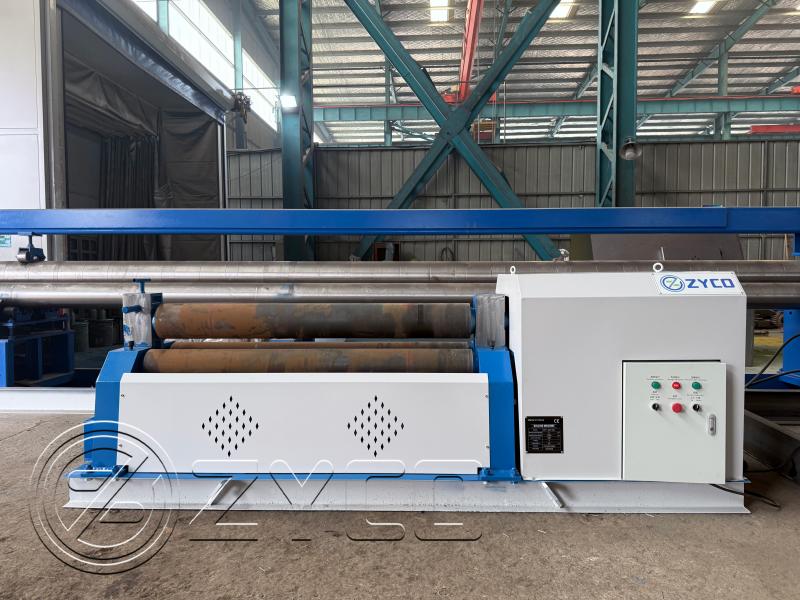
Eine 3-Walzen-Blechwalzmaschine verwendet drei Walzen zum Biegen von Metallplatten. Sie ist typischerweise in zwei Haupttypen erhältlich:
Typen von 3-Walzen-Maschinen
So funktioniert es
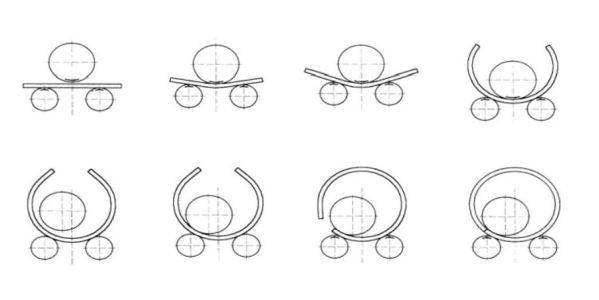
Hauptmerkmale
3-Walzen-Maschinen sind aufgrund ihrer einfachen Bauweise und der geringeren Kosten weit verbreitet.
Was ist eine 4-Walzen-Blechwalzmaschine?
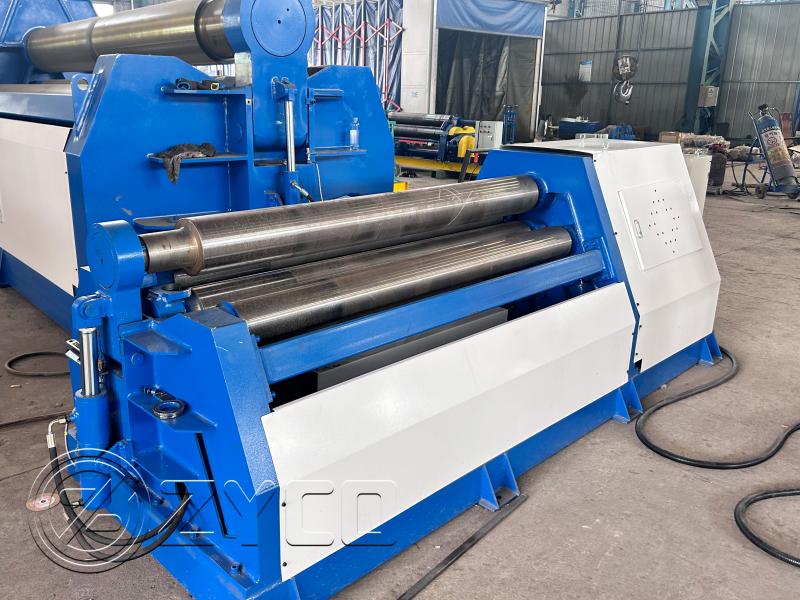
Eine 4-Walzen-Blechwalzmaschine verfügt über eine zusätzliche Walze, was eine erweiterte Funktionalität und Automatisierung ermöglicht.
Struktur
So funktioniert es
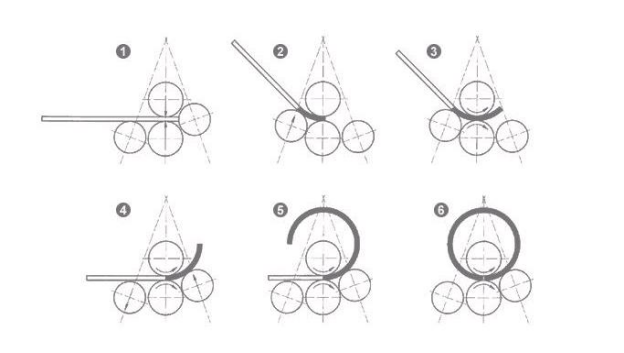
Hauptmerkmale
4-Walzen-Maschinen eignen sich ideal für Produktionsumgebungen mit hoher Effizienz und hoher Genauigkeit.
Wesentliche Unterschiede zwischen 3-Walzen- und 4-Walzen-Blechwalzmaschinen
| Besonderheit | 3-Walzen-Maschine | 4-Walzen-Maschine |
| Anzahl der Würfe | 3 | 4 |
| Plattenklemmung | Beschränkt | Stark (oben + unten rollen) |
| Vorbiegen | Beschränkt | Ja (an beiden Enden) |
| Genauigkeit | Mäßig | Hoch |
| Automatisierung | Untere | Hoch (CNC) |
| Betrieb | Weitere Anleitungen | Einfach |
| Effizienz | Medium | Hoch |
Die zusätzliche Walze einer 4-Walzen-Maschine ermöglicht eine bessere Kontrolle und Stabilität beim Walzen.
2. Vorbiegefähigkeit
Erfordert Umpositionierung und mehrere Arbeitsgänge
Beide Enden können in einem Arbeitsgang vorgebogen werden.
Dies ist einer der größten Vorteile von 4-Walzen-Maschinen: die Reduzierung von flachen Kanten und die Verbesserung der Effizienz.
3. Rollgenauigkeit
4-Walzen-Maschinen bieten eine bessere Rundheit und Maßhaltigkeit, insbesondere bei dicken Blechen.
4. Bedienung und Benutzerfreundlichkeit
Weitere manuelle Einstellungen
oHöhere Qualifikationsanforderungen
Moderne CNC-4-Walzen-Maschinen verkürzen die Einarbeitungszeit erheblich.
5. Produktionseffizienz
Für die Großserienfertigung bieten 4-Walzen-Maschinen einen höheren Durchsatz und geringere Arbeitskosten.
6. Kosten und Investitionen
Niedrigere Anfangskosten
Geeignet für kleine Werkstätten
Höhere Investitionen
Besserer langfristiger ROI
Unternehmen, die auf Automatisierung und Produktivität setzen, entscheiden sich trotz der höheren Anschaffungskosten oft für 4-Walzen-Maschinen.
Vorteile von 3-Walzen-Blechwalzmaschinen
Dreiwalzenmaschinen sind aus folgenden Gründen immer noch weit verbreitet:
Vorteile von 4-Walzen-Blechwalzmaschinen
4-Walzen-Maschinen bieten entscheidende Vorteile:
Sie sind die bevorzugte Wahl für die industrielle Fertigung und Anwendungen mit hohen Präzisionsanforderungen.
Anwendungsbereiche: Welche Maschine sollten Sie wählen?
Wählen Sie eine 3-Walzen-Maschine, wenn:
Sie verfügen über ein begrenztes Budget
Sie benötigen hohe Genauigkeit und Konsistenz.
Branchenanwendungen
Beide Maschinen finden breite Anwendung in:
In Branchen, die hohe Präzision und Automatisierung erfordern, werden jedoch zunehmend 4-Walzen-Maschinen bevorzugt.
Warum moderne Hersteller 4-Walzen-Maschinen bevorzugen
Mit dem Fortschritt der CNC-Technologie sind 4-Walzen-Blechwalzmaschinen für viele Hersteller zum Industriestandard geworden.
Zu den wichtigsten Gründen zählen:
Hersteller wie ZYCO bieten fortschrittliche 4-Walzen-Blechwalzlösungen an, die auf Präzision, Langlebigkeit und einfache Bedienung ausgelegt sind und Unternehmen dabei helfen, auf dem globalen Markt wettbewerbsfähig zu bleiben.
Abschluss
Der Hauptunterschied zwischen 3-Walzen- und 4-Walzen-Blechwalzmaschinen liegt in ihrer Konstruktion, Effizienz und Präzision.
Die Wahl der richtigen Maschine hängt von Ihrem Produktionsumfang, Ihren Genauigkeitsanforderungen und Ihrem Budget ab.
Für Unternehmen, die ihre Produktivität und Produktqualität verbessern wollen, ist die Investition in eine moderne 4-Walzen-Blechwalzmaschine eine strategische Entscheidung, die langfristigen Nutzen bringt.

Lassen Sie Ihre E -Mail -Adresse und -anforderungen, unser professionelles Verkaufsteam wird die am besten geeignete Lösung für Sie entwickeln.


Copyright
© 2026 Nanjing Zyco CNC Machinery Co., Ltd. Alle Rechte vorbehalten
.
 NETZWERK UNTERSTÜTZT
 Deutsch
 English
 français
 italiano
 русский
 português
 español
 한국의
한국의 Türkçe
 العربية